

Understanding Canadian farmland values
Farmland refers to land that is used or capable of being used for agricultural production, including the cultivation of crops and the raising of livestock. It is a productive natural asset capable of generating biological output through soil, water, climate, and disciplined management. Understanding region-specific value determinants is essential for maintaining pricing discipline throughout the purchase process.
The main determinants of Canadian farmland values
-
Supply and demand dynamics:
Canada loses between 50,000 to 60,000 acres of prime farmland every year to non-farm uses, but concurrently, global demand for Canadian agricultural products is increasing as the world’s population grows and diets shift toward higher-protein food sources (1,2). Expansion-focused producers throughout the country are consistently seeking out high-quality farmland.
-
Biological productivity:
Value is linked to region-specific, unique combinations of soil health, climate, and water availability. Richer soils and areas with more suitable climate characteristics and water availability lead to the production of higher-value crops. Crop type is a key driver of value, with higher-value crops such as vegetables and other specialty crops generating significantly more revenue per acre compared to expansive acreage of cereals and pasture. Furthermore, regions that can support more intensive and diversified crop rotations increase long-term revenue potential and ultimately land value.
-
Market access and infrastructure:
Ease of access to end markets is key. Proximity to densely populated areas for both food demand and labour supply, as well as transport, storage and food processing infrastructure, also contributes significantly to farmland value.
Some other factors that affect farmland values are local family dynamics, local farming operating depth, government regulations, and factors such as commodity prices and farm input costs.
A synopsis of farmland values across Canada
Canada is not one farmland market. It is a mosaic of regional markets with different agronomic and economic realities. In Canada, farmland spans 153 million acres and is operated by 189,874 farm families (3). Agricultural operations are largely concentrated in the provinces listed below which exhibit a wide range of farmland values both within and across the provinces.

Figure 1: Range of values broken down by main farming provinces in Canada(4).
There are several reasons for this wide range of values aside from developmental speculation. The provinces in Canada are so vast and have such varied topography that even provincial sub-regions can have significantly different microclimates, soil types, water access, population densities, and market access. For example, in British Columbia, some regional climate zones and soil types are well-suited to growing different high-value crops and command higher land values. Blueberries and vegetables grow well in the wide and flat Fraser Valley, where there are moderate temperatures and high rainfall, whereas wine grapes and apples grow well in the steeper sloping Okanagan Valley, where there are hot summers and cold winters that are suitable for those highvalue crops. In contrast some northern parts of the province are less suitable for farming due to a combination of climate, topography and infrastructure constraints and command significantly lower per acre values.
In Ontario and Quebec, sections of those provinces benefit from long growing seasons, reliable precipitation, proximity to processing and export infrastructure, and a very diverse crop mix, including many high-value crops which lead to higher per acre values. There are also distinct characteristics, such as proximity to abundant freshwater in areas near the Great Lakes and the St. Lawrence Seaway system, that contribute further to the wide range of intra-provincial farm values. Please see below for an example of value determinants of Ontario farmland.

Figure 2: Farmland values across three Ontario regions vary dramatically based on growing conditions and market access. This illustrates how climate, freshwater access, and logistics together shape farmland pricing across the province(4,5,6).
In contrast, Prairie farms are operated at larger scale and focus on cereal and oilseed production, complemented by extensive pastureland operations for grazing. These regional differences reflect distinct agro-climatic conditions: the Prairies experience shorter growing seasons and more extreme continental temperature swings without the moderating influence of large water bodies. While Prairie regions possess excellent soils well-suited to their specialized crop mix, the combination of limited growing degree days, lower moisture availability, and reduced access to irrigation infrastructure in many areas means these lands are optimally adapted to drought-tolerant cereals, oilseeds, and livestock operations rather than higher-revenue specialty crops. Prairie agriculture operates with impressive efficiency at scale offsetting lower per-acre revenues with volume. However, these fundamental biophysical differences result in meaningfully different land productivity profiles and, consequently, lower comparable per acre value to other provinces.
Canada’s agricultural footprint is broad, and the underlying production conditions and prices per acre are anything but uniform.
Analyzing and understanding the minutiae of the drivers of regional values is essential to the purchase process and requires deep analysis and research enhanced by local relationships.
The importance of relationships
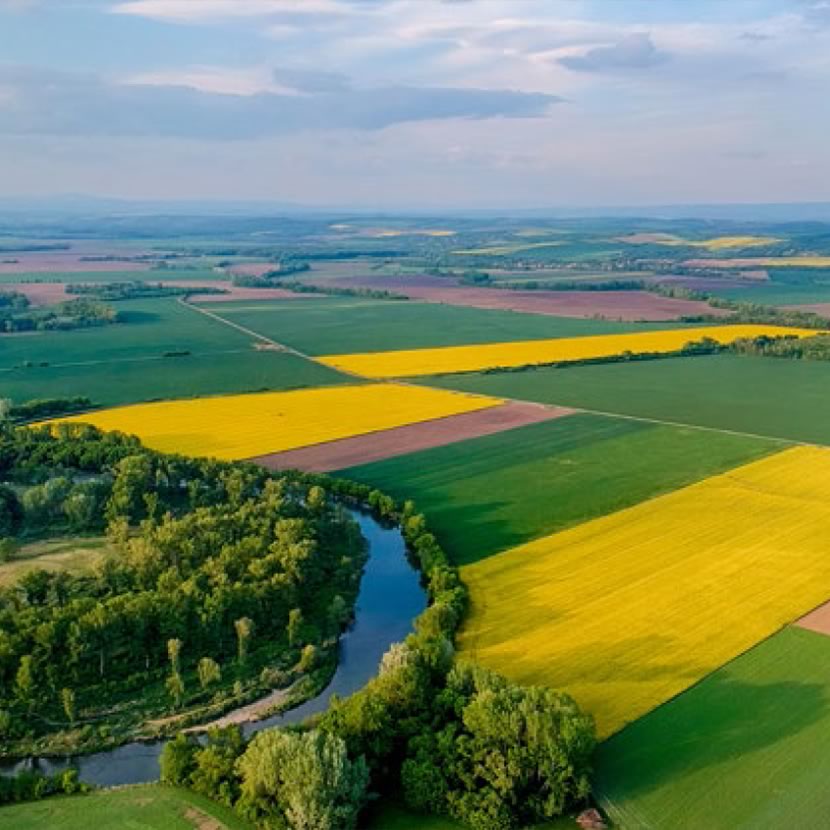
The highest-quality farm purchase opportunities are often not broadly marketed. The vast majority of these transactions are still local, relationship-driven, and fragmented. They move through networks built over years of trust within communities, starting with farm families who are typically acting on advice from lawyers, accountants and banking relationships. Cultivating strong relationships is an art that takes purposeful effort and time.
Crescero is often approached by farmers or the farming network when a significant purchase opportunity arises. Many farm families care deeply about who will own the land next, how quickly the transaction can close, whether the farm will remain in production, and whether the next steward understands agriculture. Crescero does not engage in bidding against farmers or acquisitions when other farm families are already engaged and does not buy land for speculative purposes. Our approach is to acquire and optimize farmland assets, retain them in agricultural production through long-term leasing arrangements with qualified operators, and frequently partner with the originating farm family that brought the opportunity forward to Crescero. This structure enables farm families to unlock the equity embedded in their land while continuing to operate it if so desired, and it also creates a pathway for qualified producers to expand their operations by accessing farmland without the significant upfront capital required for ownership.
At Crescero, we are farmers ourselves.
We speak the language, have boots on the ground and often sit at farmers’ kitchen tables to understand their transition plans and how they would like their assets to be treated after they are sold. After all, some of these assets have been in their families for generations, and they and their ancestors have poured their blood, sweat, tears and love into this land over time.

Many of these transactions must be handled delicately, and they look to people they can trust and who have the specialized knowledge needed to preserve and improve the value of the assets over time. Treating farmers and all participants in the farmland ecosystem consistently with respect, valuing their input, assuring them that the asset will be managed well after the sale and providing them with transparency builds strong relationships and leads to a pipeline of high-quality purchasing opportunities.
Importantly, as well, our focus on deep local relationships also allows us to go beyond what is typically part of an analytical framework. We look at the neighbour dynamics, the quality of the tenant pool in that area, the credibility of an operator beyond financial metrics and get behind the reason a family is selling. Having strong relationships in the agricultural community allows us to gain access this information.
Disciplined underwriting is essential

The underwriting process of purchasing farmland can be considered a science. As in any real asset class, many analytical processes can only be well developed from on-the-ground experience where time, trials and tribulations hone the processes into robust quantitative and qualitative analytical tools. At Crescero, we execute a comprehensive six-step underwriting process. A summary of the main criteria we analyze in each part of the process is provided here:
- Curated pipeline of purchase opportunities:
Analysis of comparable transaction prices, capitalization rates, optimization potential and exclusion of landheld for speculative purposes.
- Opportunity assessment:
Evaluation of soil types, land zoning, road access, water access, actual and potential income streams, proximity to infrastructure, natural capital enhancement potential and cost-benefit analysis of optimization projects.
- On-Site farm visits and producing a weighted farm score:
Performing thorough on-site farm inspections, testing and verification. Analysis of soil nutrient capacity, soil class, yield stability, drainage capacity and climate characteristics.
- Portfolio fit:
Analysis of how the addition of the purchased farm may affect risk/return, concentration limits, the liquidity profile, operational complexity and overall leverage.
- Investment Committee (IC):
Emphasis on overall risk, portfolio fit and the ability to execute the strategy effectively on the farm to maximize value creation. The IC must unanimously approve the purchase.
- Legal due diligence:
Ensuring ownership is clear, transferable and free from hidden risks.
In many cases, moving decisively and with agility is needed to capture the best purchase opportunities. Typically, a purchase offer must be made within a few days of the deal becoming available. This leaves only a short window to underwrite and structure an offer. Success in those moments depends on a strong due diligence process that enables strict pricing discipline and the timely capture of competitive opportunities without compromising underwriting rigour.
Strong asset managers are key to maximizing value
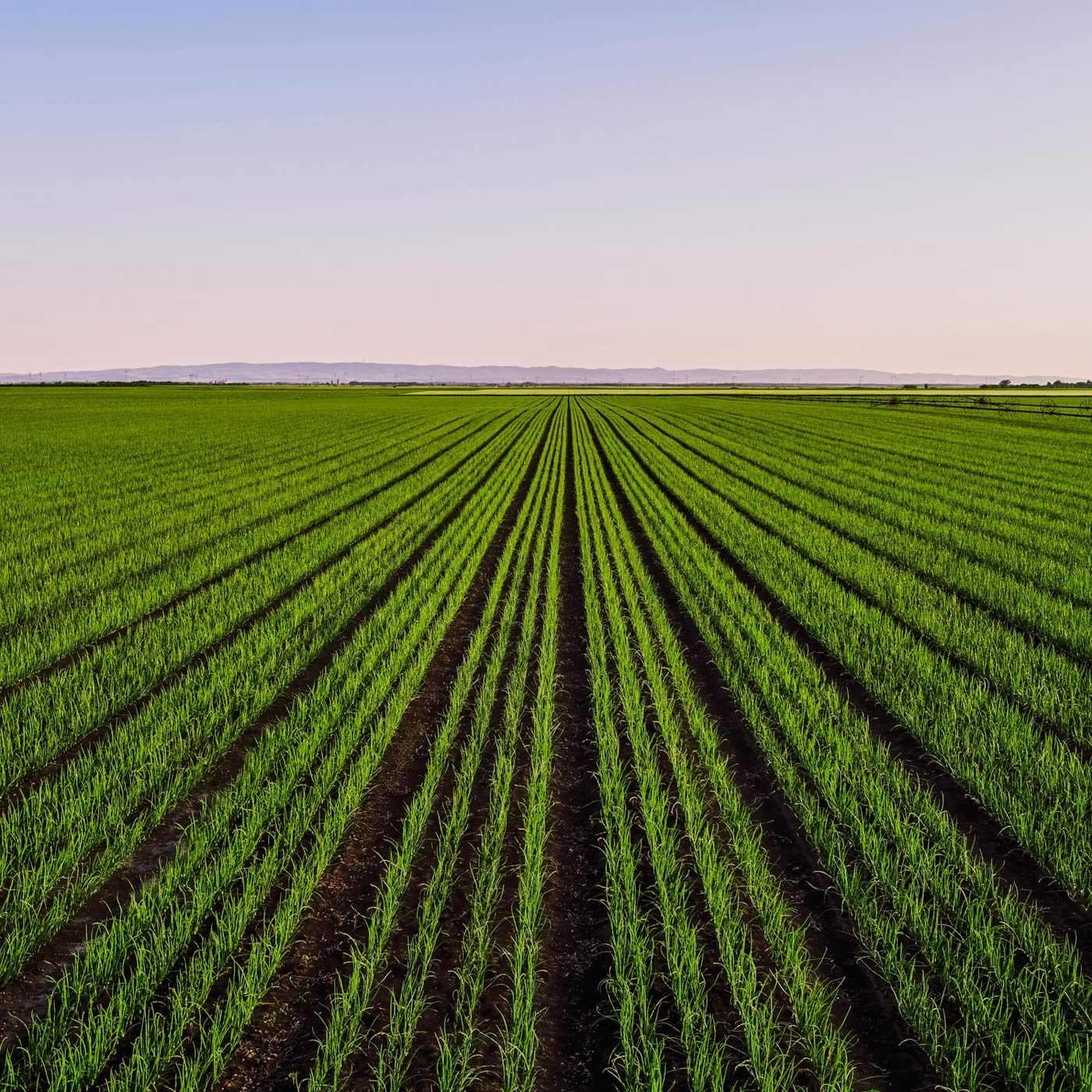
Capturing significant value is often won or lost at the purchasing stage, where Crescero has deep experience in identifying and purchasing undervalued farms. This requires both the art of cultivating and maintaining deep industry relationships and the science of disciplined underwriting. Farms can transact below their intrinsic value for a number of reasons including shorter-term market dynamics, circumstances within farm families or because there are identifiable opportunities to enhance the land through optimization.
In many cases, farm families are also willing to transact at attractive values because Crescero provides a structured liquidity solution that allows them to unlock equity while continuing to farm through leaseback arrangements if desired. Our longstanding reputation as a responsible steward of farmland further supports these transactions by giving vendors confidence that we will continue to care for their land after it is sold.
Purchasing farmland well is never just about accumulating acres. It’s about relationships, understanding the land, the people, the region, the risks, and the improvement pathway with enough conviction in the underwriting process to act decisively and specialized knowledge to steward the asset properly. This is where a strong asset manager adds tremendous value.
That is the art.
That is the science.
In the Canadian landscape, purchasing farmland that can create the most value requires both.