
The enduring value of farmland
Farmland is a unique and resilient asset, insulated from the volatility of traditional markets. Unlike stocks and bonds, its value is directly tied to the fundamental need for food, making it a stable and essential component of long-term investment strategies.
With global population growth expected to approach 10 billion by 2050, farmland’s role in feeding the world is becoming increasingly critical. At the same time, the availability of arable land is shrinking due to urbanization, industrialization, and climate change. This imbalance between growing demand and declining supply underscores farmland’s strategic importance.

The above illustration shows the agricultural land per capita for major countries and regions.
Canada stands out globally, with more than twice as much agricultural land per capita than the world average (2021), positioning the country as a key leader in addressing global food security in the future.
The unique advantages of Canadian farmland
1) Abundant freshwater resources
Canada is home to 20% of the world’s freshwater reserves and ranks third globally in renewable water supply. As water scarcity becomes a critical global issue, Canadian agriculture enjoys a distinct advantage, with reliable access to freshwater ensuring consistent productivity.
2) Fertile soils and geographic strength
Canada’s expansive farmland produces vital crops like wheat, canola, soybeans, and corn, which are essential for feeding domestic and international markets. These fertile soils and favorable geographic conditions position Canadian farmland as a cornerstone of global food security.
3) Political stability and secure investments
Unlike regions prone to geopolitical instability, Canada provides a transparent and secure environment for farmland ownership. Strong governance institutions, clear regulatory frameworks, and well-protected property rights make it a dependable destination for long-term investments.
4) Adaptability to climate change
While climate change disrupts agriculture worldwide, Canada’s northern latitude benefits from longer growing seasons and milder winters. These shifts allow for increased productivity, expanded arable land, and greater crop diversity, ensuring Canadian farmland’s resilience in a changing climate.
In summary, the unique advantages of Canadian farmland abundant freshwater resources, fertile soils, political stability, and adaptability to climate change make it an unparalleled asset for addressing global food security while providing investors with a stable, resilient, and high-potential investment opportunity.
Sustainability: A pillar of farmland value
Sustainability is critical to preserving the long-term value of farmland. Unsustainable practices have historically led to soil depletion, water overuse, and reduced yields. In contrast, Canadian farmland integrates sustainable agricultural methods, including:
1) Crop rotation
Enhancing soil fertility and reducing pests.
2) Reduced tillage
Preserving soil structure and reducing erosion.
3) Precision farming
Using technology to optimize resource use, such as water and fertilizers, while minimizing waste.
These practices not only protect the land but also align with broader climate goals by sequestering carbon, conserving water, and reducing chemical inputs. Sustainability ensures that farmland remains productive while contributing to global environmental progress.
Technological advancements in Canadian agriculture
Canada is a global leader in agricultural technology (AgTech), driving innovation that enhances productivity and sustainability. These advancements empower Canadian farms to produce more with fewer resources, ensuring long-term value and competitiveness. Key developments include:
1) Precision agriculture
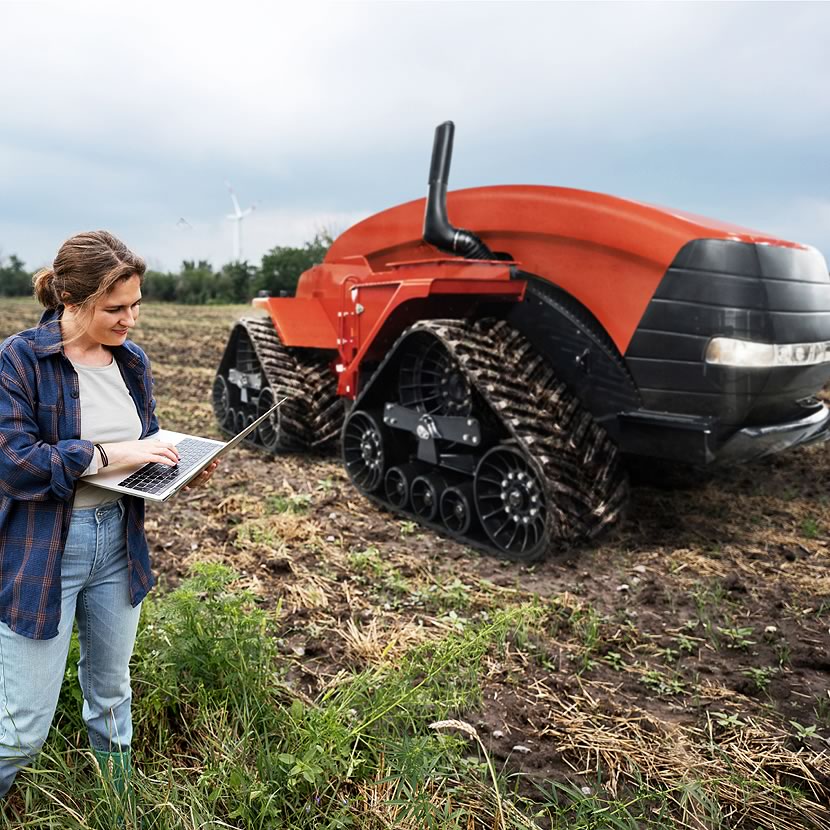
Technologies such as GPS-guided machinery, advanced soil monitoring, and data-driven decision-making optimize planting, fertilization, and nutrient application. By tailoring inputs to specific field conditions, farmers reduce waste, improve efficiency, and maximize yields.
2) Automated equipment
Robotic systems and autonomous machinery enable farmers to manage larger operations with greater efficiency, reducing labor costs and streamlining complex agricultural tasks.
3) Seed genetics and crop optimization
Advances in seed genetics are enabling Canadian farms to adapt to shifting growing conditions. Varieties designed for northern latitudes allow crops to mature faster, taking full advantage of extended growing seasons. In southern regions, dual-cropping systems—where two crops are grown and harvested in a single year—are becoming more feasible, increasing productivity and economic returns.
These innovations ensure Canadian farmland remains a resilient and valuable asset in the face of evolving global challenges, further solidifying its appeal as a strategic and sustainable investment.
Partnering with agriculture for impact
At Crescero Natural Capital, we prioritize win-win solutions that align investor goals with the needs of Canadian agriculture. By leveraging private capital, we help retiring farmers unlock the value of their land, empower the next generation of producers to modernize and expand operations, and ensure farmland remains both productive and sustainable.
This partnership-driven approach creates opportunities for meaningful impact while delivering strong financial returns. Farmland investments at Crescero are not just about profitability—they are about fostering thriving rural communities, preserving ecosystems, and supporting global food security.
The future of farmland
As global food demand continues to rise and arable land becomes increasingly scarce, the importance of farmland as a resource will only grow. Canadian farmland, with its abundant water, fertile soils, and adaptability to climate change, is uniquely positioned to address these challenges.
For investors, this represents an extraordinary opportunity to align financial objectives with sustainable, long-term impact. By prioritizing innovation and stewardship, farmland investments can drive meaningful progress while securing stable and resilient returns.
Conclusion
Canadian farmland is more than an investment—it is a commitment to addressing some of the world’s most pressing challenges, from food security to climate resilience. Its unparalleled resources, sustainability, and technological integration make it an ideal asset for those seeking to combine profitability with purpose.
At Crescero Natural Capital, we invite investors to join us in building a future where financial growth and meaningful impact go hand in hand. Together, we can secure a better future for farm families, communities, and the planet.