
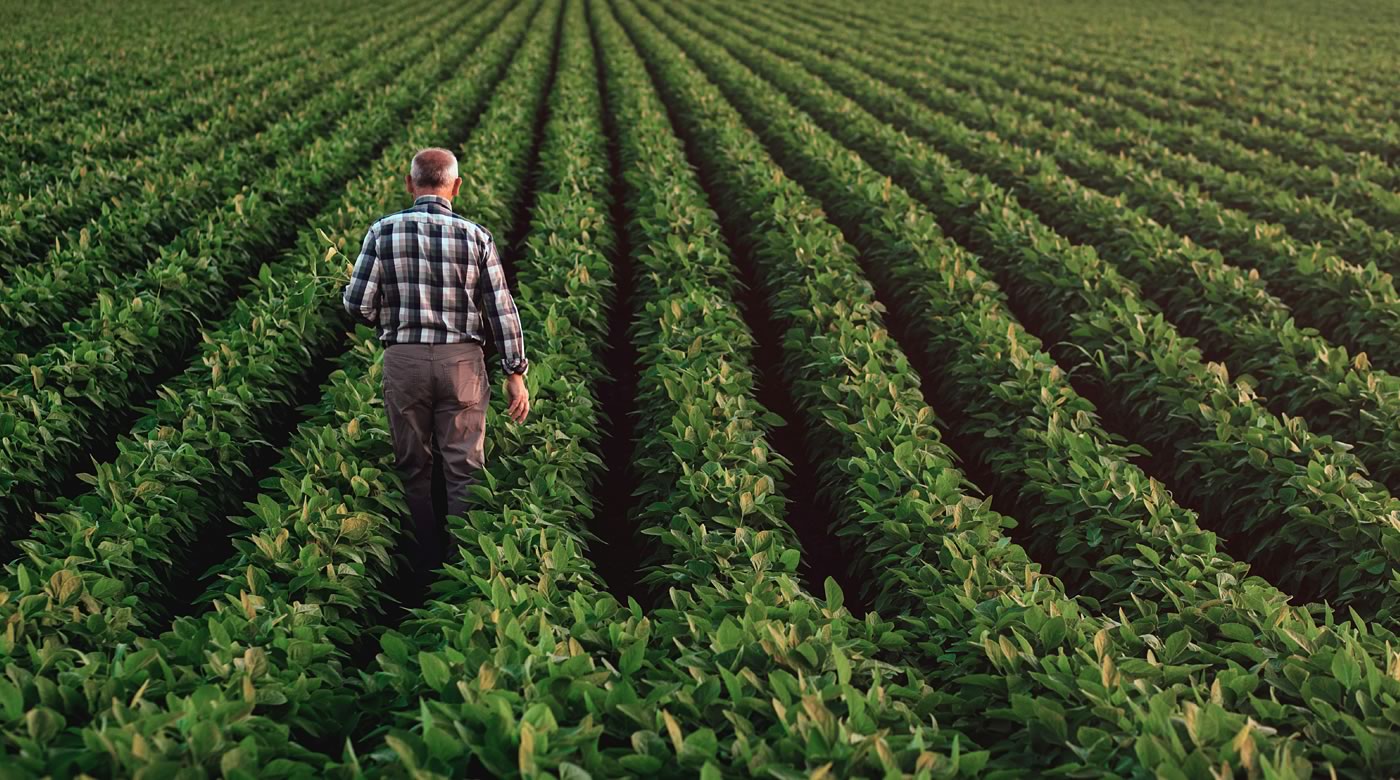
As with any real asset, farmland does not naturally remain at peak performance. Unless methodically maintained, drainage systems age, soil profiles degrade, rocks surface through farming cycles, and sub-optimal land use practices can leave farms underutilized or even dilapidated over time. The distinction between an optimized and a non-optimized farm can be substantial: optimized properties support consistent yields, reduce operational inefficiencies, and maintain soil health over time, whereas unoptimized farms do not perform at their full potential and degrade over time, lowering returns and increasing risk.
Farmland optimization at Crescero can be broken down into land and financial optimization, as described below.
Land optimization
Land optimization is the improvement of the agronomic and physical attributes of the land and can be divided into the following three practices:
Soil health monitoring and improvement
Maintaining soil health is essential because organic matter, nutrient availability, pH balance (measure of acidity/alkalinity), and erosion control collectively determine a field’s long-term productivity, biological activity, and ability to retain its most fertile topsoil.
In order to optimize soil health, we firstly perform soil testing to establish nutrient levels, a baseline for organic matter and pH and then amend the soil with targeted nutrients or pH adjustments where needed.
This is followed by periodic testing and amending to ensure conditions remain optimal for crop performance. Additionally, Crescero’s grower agreement specifies that farmers must rotate crops in sequential growing seasons along with several other best practices. Rotating crops reduces pest and disease pressure and naturally improves soil structure over time.
Crescero not only measures and monitors soil health from a nutrient perspective; we also work closely with farm operators to safeguard the top layers of the soil horizon against erosional forces such as wind, water, and nutrient depletion. Two of the most effective levers are tillage management and cover-crop integration.
Traditional soil tillage often involves intensive inversion of the soil through mechanical turning, stirring and breaking up of soil. This type of tillage introduces several risks one of which is reducing soil stability which allows soil particles to become loose and be easily eroded by wind or water. Modern machinery and precision technologies enable significant reductions in the intensity of soil tillage. Crescero collaborates with its growers to provide clear tillage guidelines that limit soil disturbance while maintaining strong yield performance.
Cover crops are not for harvest but are planted to protect the soil in between growing seasons. Cover-crop strategies protect the soil surface from winter erosion and furthermore extend green cover into late fall and early spring to enhance carbon sequestration, promote the development of soil organic matter and soil stability. Crescero mandates that our growers plant cover crops on lighter soils and strongly encourages them on heavier ground.
Enhancing water management
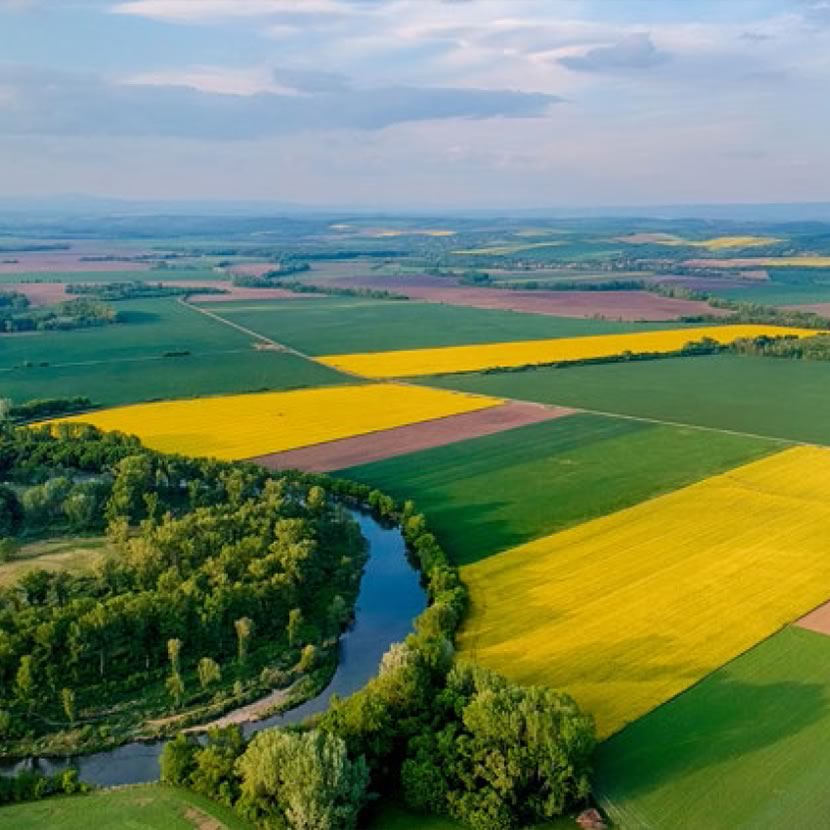
Effective water management is critical because both excess moisture and water shortages can limit root development, reduce yields, and increase the risk of nutrient runoff into downstream ecosystems.
The team advances water management in a few ways with the first being the installation of tile drainage systems. Tiles are long perforated plastic tubing that are placed in engineered trenches below the soil surface to create controlled pathways for excess water to exit the root zone.
By preventing saturation and maintaining the ideal balance of air and moisture within the soil profile, tile drainage enhances infiltration capacity, increases resilience during extreme rain events, and supports stronger crop performance. The result is materially higher and more consistent productivity across the farm.
Check out a recent video from the Crescero team explaining the importance of adequate drainage.
Another water management strategy we employ is installing or expanding irrigation ponds or dams, which provide growers with supplemental water sources. This can be especially useful for higher-value crops grown in areas with sand to sandy loam soils, which usually require timely water applications for consistent yields. To further enhance water management, the team also installs buffer strips on the land, which are permanent vegetation strips planted between farm fields and waterways. These act as barriers between the cropped fields and waterways, slowing runoff and filtering out sediment, nutrients, and agrichemicals such as fertilizers and pesticides before they enter downstream water systems.

Increasing farm efficiency
Improving farm efficiency reduces operational bottlenecks, minimizes equipment strain, and ensures that the full productive capacity of the property is realized.
Some ways in which our team increases farm efficiency are by consolidating fragmented fields and by installing multiple farm access points to improve operational logistics. The team also assesses which parts of the farm are being underutilized and brings these acres into full productivity.
This could involve the disposal of dilapidated structures, removing old equipment and the repurposing of underutilized areas of the land.
Financial optimization
Financial optimization is the process of ensuring the capital allocation to the land is optimal and that the land is generating cash flow to its utmost potential. This can be divided into two main practices.
Liquidation of non-core assets
The liquidation of non-core components strengthens the economic profile of the property by reducing maintenance costs, eliminating operational risks, and freeing capital that can be redirected toward productive farmland improvements.
Crescero offloads unused barns, obsolete buildings, and then severs and sells residential houses that were historically part of the farm to unlock capital, which is subsequently reinvested into the farms.
Optimizing land use with revenue-generating ancillary assets
Leasing sections of the land to counterparties who need to rent land for other uses besides farming increases the revenue generated from the land. These uses do not materially encroach on farming operations.
On several Crescero managed farms, land is leased for alternative energy assets such as wind turbines and solar units generating stable, and long-term cash flows. In each case with its partners, care is taken in the selection of sites such that minimal impact to farm operations occur.
Crescero’s Outlook
For investors, these forms of optimization increase and protect long-term asset value while mitigating operational risk within the portfolio. For farmers, the same improvements translate into more workable acres, smoother field operations, and more consistent agronomic performance. The cumulative effect is a property that is both more functional and more valuable across both financial and agronomic dimensions.
Crucially, many of these enhancements also build the farmland properties’ natural capital, improving soil health, water access and retention and biodiversity. This leads to the enhancement of long-term returns and reduces the risk of degradation of the asset, all while advancing healthy environmental ecosystems.
The case study that follows illustrates how some of these principles apply in practice, showing how targeted improvements on a tired Ottawa Valley farm restored productivity and created enduring value for all stakeholders.
A Case Study in Restoring Productivity:
How Smart Optimization Revived a Tired Farm
When we first stepped onto this farm in the Ottawa Valley, it was clear the land had seen many different uses over the years, and not all of them had been kind. The region sits on what was once the floor of the ancient Champlain Sea, where glacial activity left behind a mix of marine sediments and heavy stone deposits. Fences and fence rows divided the property into awkward sections, water pooled in the low spots, and rocks the size of soccer balls dotted the fields. Several portions of the land were simply unplantable.
But beneath those challenges, we saw meaningful potential for both land optimization and financial optimization. The property had become a patchwork of fragmented fields and inconsistent drainage. Saturated soils limited planting windows, old fencing made efficient fieldwork nearly impossible, and persistent stone deposits that are common in this part of the Ottawa Valley, created further barriers to productivity. Before any improvements could be made, we started where any good restoration begins; by getting to know the land.
Our first step was to work with local contractors to clear the old fence lines and reposition large rock piles along the new property boundary. Removing physical barriers immediately increased field continuity and enabled us to plan larger, more efficient operational blocks. This early work contributed to both land and financial optimization by improving field layouts and eliminating future maintenance costs associated with obsolete infrastructure.
From there, we collaborated with neighbouring landowners and local contractors to design and install a comprehensive tile-drainage system. By preventing waterlogging, proper drainage was transformative as it improved the soil horizon where root systems grow leading to healthier plants and enhanced yield reliability. Beyond crop benefits, drainage also enhanced the property’s natural capital by reducing unnaturally occurring stagnant wet zones and improving how water moved across the landscape, aligning with our goal of improving water management on every property.
While we value wetlands where they naturally occur, much of this area had long been altered for agricultural use but was left degraded. Our work restored these acres to productive use while being careful to maintain natural water flow paths and avoid downstream impacts. With drainage complete, and after a season of cover cropping that reduced soil erosion and that allowed tile lines to settle, we brought in a local rock-picking crew to clear heavy surface stones. It was slow, patient work, but essential. As the stones came up, the land gradually shifted from fragmented and uneven to open, level, and capable of sustaining reliable cropping year after year.
We also undertook an important financial optimization technique, which was severing the residential farmhouse from the agricultural parcel. Selling the residence back into the community allowed us to realize value from this non-core asset and to reinvest capital directly back into the land, keeping dollars invested where they drove the greatest long-term value and reduced the future maintenance obligations.
Today, the transformation is tangible.
What was once a disjointed and underperforming asset is now a cohesive, efficient, and highly functional farm.
Fields that once held excess water are now healthy and productive. Field operations are smoother, equipment experiences less wear due to more uniform ground conditions, and yields are stronger and more consistent across the property. These optimization endeavours lead to material increases in land value over time, command higher rents and reduce the risks associated with operating the farm as well as the risk of the asset’s degradation.
Moreover, the project demonstrates the broader value of active farmland management – not only for investors, but for the surrounding community. Local contractors were engaged throughout the process, neighbouring landowners were part of key decisions, and the farmhouse returned to local hands. Importantly, the improvements also strengthened the property’s natural capital, enhancing soil function, water resilience, and ecological stability, all of which reduce long-term degradation risk and contribute to the enduring value of the asset.
Our next steps at the property will focus on long-term soil health tracking and on ensuring that the grower continuously upholds the standards of care on the farm. As farmland asset managers, we view this as a natural extension of stewardship: continually enhancing the land, monitoring performance, and ensuring that every acre supports strong financial returns while protecting and rebuilding the natural systems that underpin productivity.
 Before: A fragmented farm shaped by decades of varied land uses - irregular field boundaries, mixed pasture areas, and sections with limited productivity.
 After: A unified, optimized field enhanced through drainage, levelling, and modern agronomic improvements - now open, efficient, and ready for consistent crop production.
At Crescero Natural Capital, we believe farmland shouldn’t sit idle or be treated as a passive investment.
Every acre can be improved economically, agronomically, and ecologically, through thoughtful management that benefits investors, farm families, and the land itself. Farmland, after all, is more than an asset class - it is living capital, and with the right care, it continues to give back.